
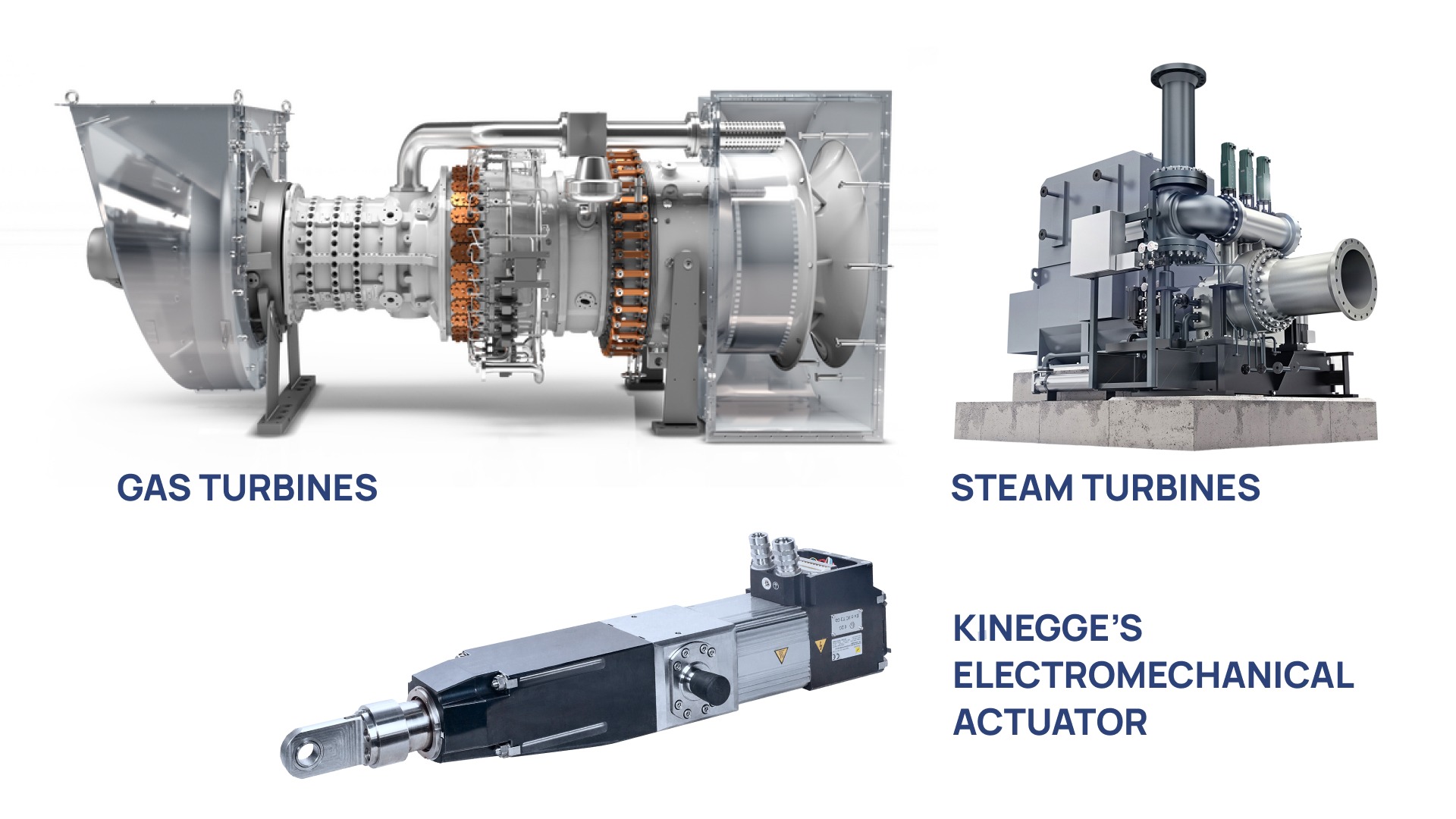
In the energy sector, turbine control systems must operate with exceptional reliability, accuracy, and durability. Whether used in steam turbines or gas turbines, actuators are among the most critical components responsible for controlling turbine power, rotor speed, and overall system stability.
Kinegge develops advanced electromechanical actuators and control units for demanding turbomachinery applications, offering a modern alternative to traditional hydraulic solutions.
Q: What do actuators do in steam and gas turbines?
A: Actuators control key turbine elements that regulate power output. In steam turbines, they control valves that manage steam flow. In gas turbines, they regulate airflow and vane positioning, including inlet guide vanes and nozzle guide vanes.
Q: Why are electromechanical actuators replacing hydraulic actuators in turbine systems?
A: Electromechanical actuators eliminate hydraulic oil, simplify infrastructure, improve control accuracy, reduce maintenance, and increase energy efficiency.
Q: What makes Kinegge actuators suitable for energy applications?
A: Kinegge actuators combine high positioning accuracy, high force density, long service life, explosion-protected design options, integrated diagnostics, and reliable operation in harsh industrial environments.
In power generation, actuators are used on steam and gas turbine generators to efficiently control generated power.
In steam turbines, actuators operate valves that regulate the flow of steam through the turbine. In gas turbines, actuators control systems such as inlet guide vanes, nozzle guide vanes, and other regulating elements that influence airflow, compressor operation, and turbine performance.
Regardless of turbine type, the actuator must meet strict requirements:
For these reasons, actuator selection is a strategic decision for turbine manufacturers, power plant operators, and system integrators.
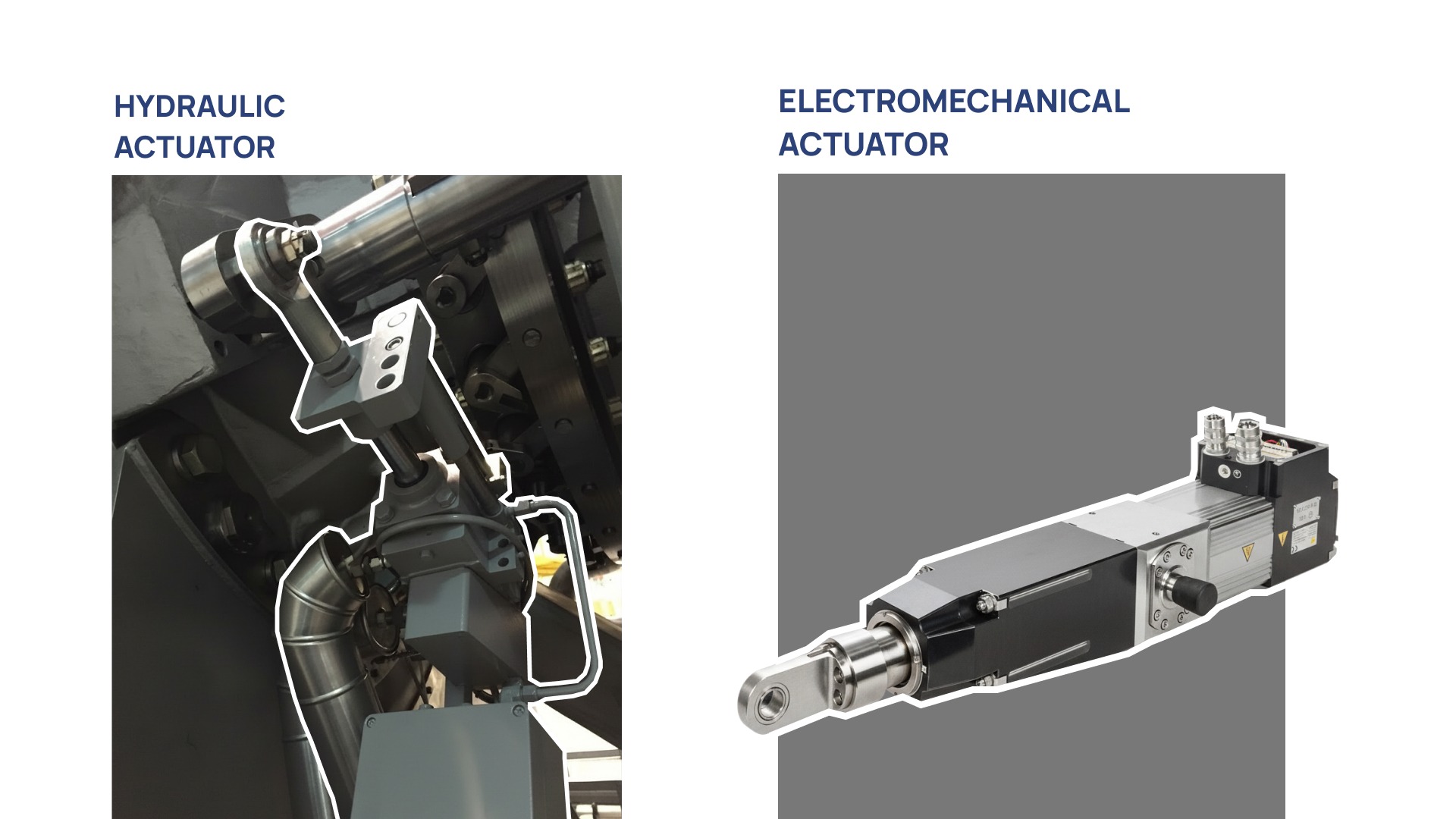
For decades, hydraulic actuators have been widely used in turbine control systems. However, the global turbomachinery market is increasingly shifting toward electromechanical solutions.
This shift is not only a technology trend — it reflects clear operational and economic advantages.
Compared to hydraulic actuators, electromechanical actuators offer several important benefits.
Electromechanical actuators do not require high-pressure hydraulic oil as a working fluid. This eliminates the risk of oil leaks, reduces fire hazards, and helps create a cleaner operating environment.
For turbine applications, where equipment can operate near fuel systems, oil vapors, and high-temperature zones, this is a significant advantage.
Kinegge electromechanical actuators provide high positioning accuracy and flexible control characteristics. Unlike hydraulic systems, where motion behavior is strongly influenced by valve design and hydraulic circuit configuration, electromechanical systems can be adjusted through control algorithms.
This enables more precise regulation of turbine power, speed, and response dynamics.
Electromechanical systems simplify the overall control architecture. They do not require hydraulic pumps, filters, coolers, pipelines, fittings, or hydraulic power units.
As a result, customers can reduce:
Hydraulic systems require continuous operation of hydraulic power units. Electromechanical actuators consume electrical energy mainly during movement, making them more energy efficient in many turbine control applications.
By eliminating hydraulic infrastructure and reducing the number of mechanical and fluid-related components, electromechanical actuators can provide higher reliability and fewer potential failure points.
Kinegge’s product line for the energy industry includes electromechanical actuators designed for applications in steam, gas, and hydraulic turbines.
These actuators are engineered to deliver:
The performance of Kinegge actuators is based on the company’s engineering and manufacturing know-how, including inverted roller screw technology, specialized thread profiles, advanced manufacturing processes, and thermochemical hardening of key roller screw components.
These design choices allow Kinegge to combine high force, compact size, durability, and repeatable precision — all essential for turbine control.
Historically, explosion-proof actuator designs for turbine applications were often produced as single-unit or small-series solutions. This approach could increase cost, extend lead times, and limit scalability.
Kinegge has taken a different path.
The company has developed a series of explosion-protected actuator designs adapted for automated serial production and certified according to requirements relevant to key gas turbine manufacturing markets.
This approach delivers several advantages:
By combining specialized actuator design with serial production principles, Kinegge helps make advanced electromechanical turbine control more accessible for global energy applications.
One of Kinegge’s core advantages is its hyperautomation approach to product development and manufacturing.
For turbine applications, this means that customized actuator and control unit solutions can be developed, validated, and moved into serial production efficiently.
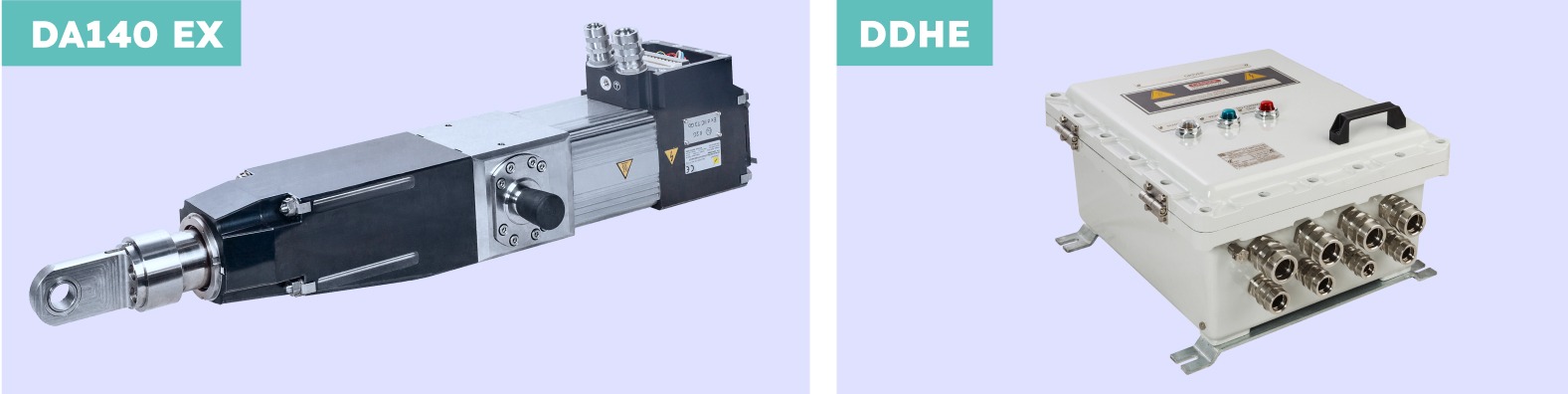
A practical example is the solution developed for a European partner, including DA140 EX actuators for controlling inlet guide vanes and nozzle vanes, as well as a protected DDHE control unit.
The solution delivered:
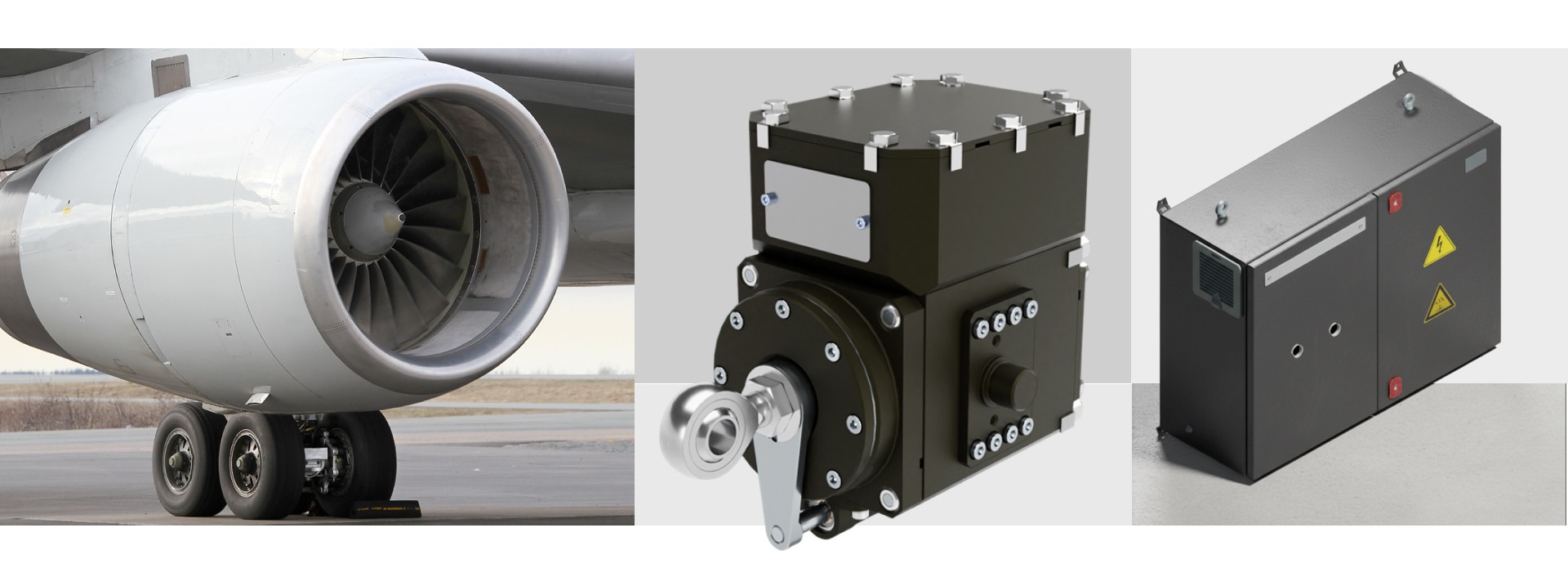
Kinegge’s experience in gas turbine actuator design has also created opportunities for diversification into more compact and lightweight turbomachinery applications.
The DA106 electromechanical actuator, based on roller screw technology and used together with a Kinegge-developed control system, can be applied for inlet guide vane control in aero-derivative and compact gas turbine systems.
This solution reflects the broader potential of Kinegge actuator technology: high precision, compact design, and reliable performance in systems where weight, size, and response time are critical.
Kinegge actuators are used in gas turbine applications across North America, the European Union, Africa, and Asia.
This global presence confirms the relevance of electromechanical actuator technology for modern energy systems and demonstrates Kinegge’s ability to support international turbine manufacturers and operators.

In addition to actuators, Kinegge develops explosion protected actuator control units for turbine applications. DDHE control units have successfully undergone testing using HALT (Highly Accelerated Life Testing) and HASS (Highly Accelerated Stress Screening) methods.
These accelerated testing approaches are used to validate long service life and reliability under extreme operating conditions.
For power generation customers, this is especially important because turbine equipment must perform consistently in continuous operation, often under demanding environmental and safety requirements.
Energy consumption continues to grow globally, supported in part by the expansion of digital infrastructure, industrial electrification, and increasing demand for reliable power generation.
To respond to this trend, Kinegge has been expanding production capacity for turbine actuator systems.
Throughout 2025, the company maintained a stable production program of 6–8 equipment sets per month. In 2026, Kinegge scaled production to meet growing market demand, doubling production volumes within three months through rapid restructuring of internal processes.
The strategic goal by 2028 is to triple production capacity compared to 2026.
This growth is supported by Kinegge’s hyperautomation model, which allows the company to scale production while maintaining quality, reliability, and delivery performance.
Kinegge’s development in the energy sector began with a strong collaboration with an Italian partner, resulting in the creation of a competitive product and an effective cooperation model.
The next step is to expand this experience to a wider range of European and Chinese turbine manufacturers and establish Kinegge as a reliable supplier of advanced electromechanical actuator and control unit solutions for the energy sector.
Steam and gas turbine applications require actuators that can deliver reliable operation, accurate positioning, fast response, environmental durability, and long service life.
Kinegge electromechanical actuators are designed to meet these requirements while offering important advantages over hydraulic systems: improved safety, higher controllability, reduced maintenance, lower infrastructure complexity, and better energy efficiency.
By combining advanced roller screw technology, explosion-protected actuator design, integrated control units, and hyperautomated serial production, Kinegge provides a new generation of actuator solutions for the energy sector.
For turbine manufacturers and power generation customers, this means more reliable control, shorter lead times, lower ownership costs, and a scalable path toward the future of electromechanical turbine regulation.